
Immigration Website UX Research and Prototype
Immigration education and process tracking prototype website and UX research
Figma wireframing, experimental design, and data analysis
Navigating the U.S. immigration process can be difficult for new immigrants, who must often find, interpret, and act on complex information across unfamiliar resources. For a graduate HCI course, our four-person team set out to design and evaluate a prototype website that could make this information easier to navigate and help users complete common immigration-related tasks more efficiently.
Our team intentionally worked without formal roles or a designated project lead, so collaboration and coordination were essential. I took the initiative to facilitate our weekly meetings, helping the team align on project priorities, identify what needed to be completed for each deadline, and divide upcoming work among team members. This helped us maintain momentum while allowing everyone to contribute across the design and research process.
Together, we developed personas and wireframes before building a high-fidelity prototype in Figma. We then designed and conducted a user study comparing participants' performance on equivalent tasks using our prototype and Google, complemented by semi-structured interviews.
I contributed to the research analysis by organizing the study data, creating graphs for our research documentation, and conducting statistical analyses to determine whether differences between the two conditions were significant.
Although our study was limited to three participants, we found statistically significant improvements in several measures when participants used our design. Tasks were completed in less time with our prototype, while NASA-TLX results showed statistically significant reductions in perceived mental demand, physical demand, and effort.
We consolidated the design process, study methodology, statistical analysis, and findings into a research paper and presented the project to our class.
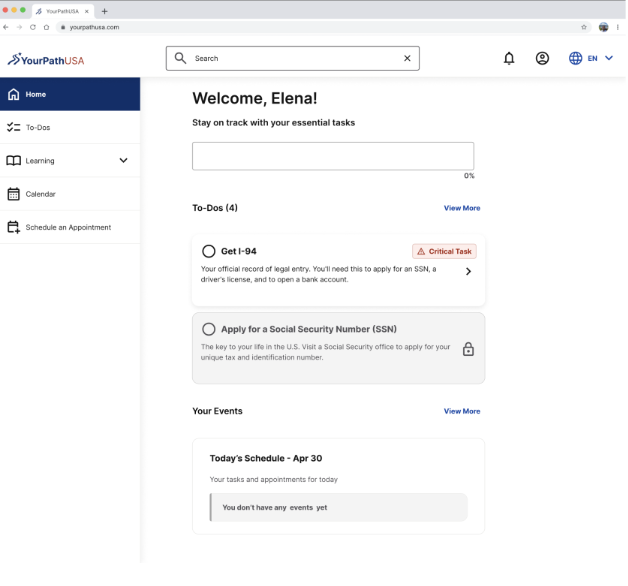
A screenshot of the high-fidelity homepage, developed in Figma
Click the image below to read the full report

or [CLICK HERE]